
Industrial Conveyor Belts
Heat Resistant Conveyor Belt
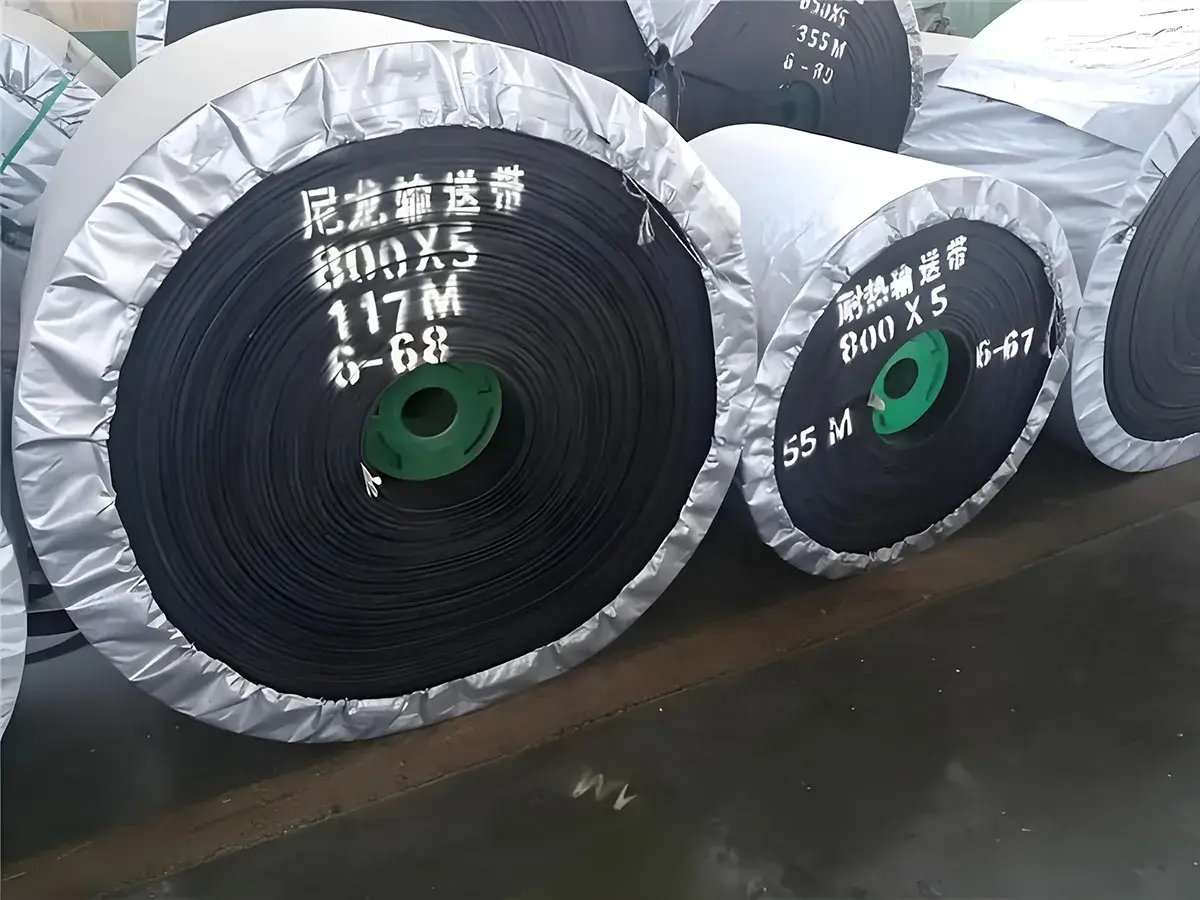
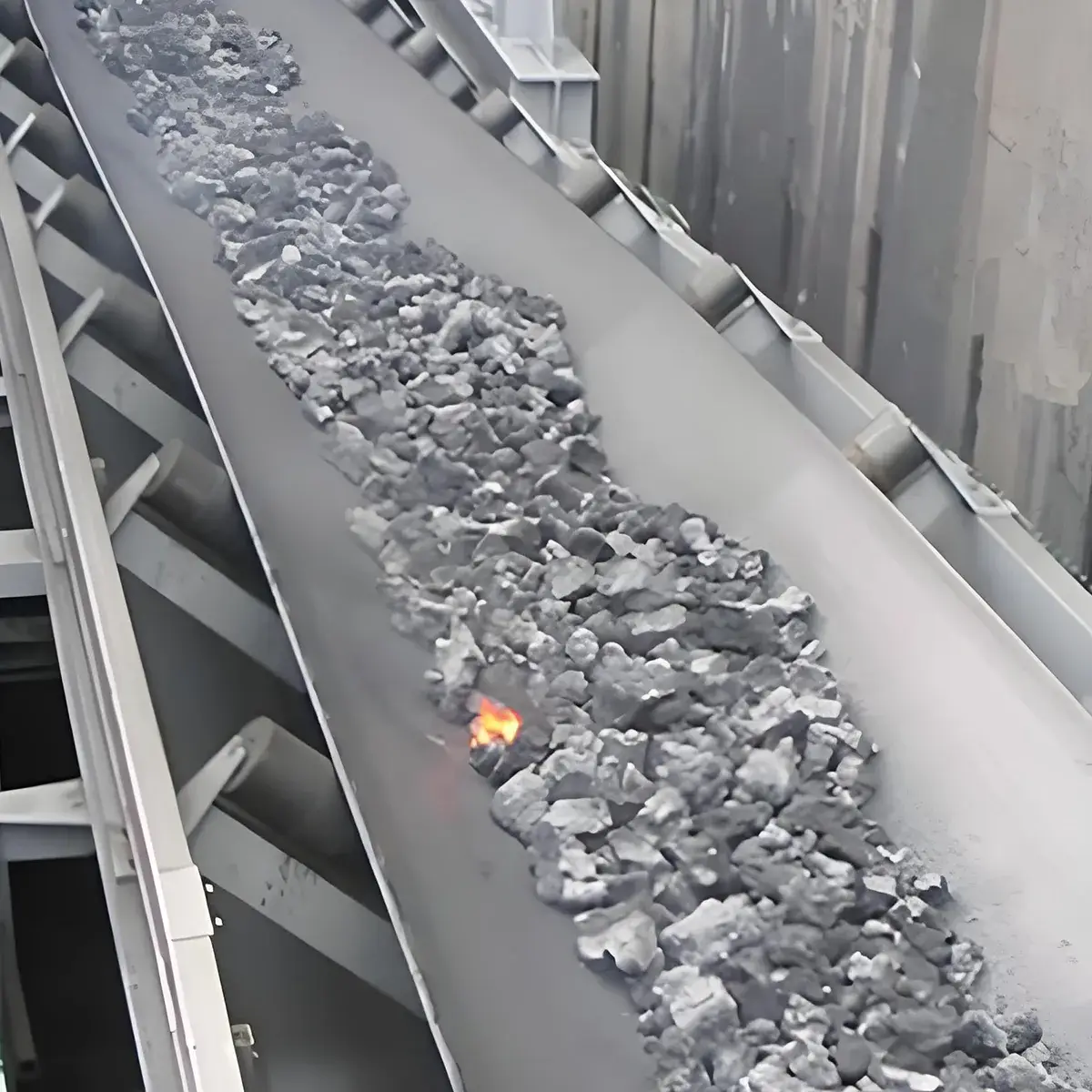
Heat-resistant conveyor belts transport high-temperature commodities while preserving structural integrity and ensuring prolonged durability.
Classification according to temperature grade (T1–T4)
- T1: Test temperature ≤100°C, maximum short-term operating temperature 150°C.
- T2: Test temperature ≤125°C, maximum short-term operating temperature 170°C.
- T3: Test temperature not exceeding 150°C, maximum short-term operating temperature 200°C.
- T4: Test temperature ≤175°C, peak short-term operating temperature 250°C or more.
For elevated requirements, we manufacture belts rated for a test temperature of 240°C, with a short-term operational temperature of up to 600°C.
Classification based on carcass composition
- Standard Heat-Resistant Belt: polyester-cotton substrate.
- Robust Heat-Resistant Belt: polyester (EP) carcass, classified by strength from EP100 to EP500 (e.g., EP300 endures 300 N/mm of belt width).
- Heat-Resistant Steel Cord Belt: features a steel cable carcass encased in heat-resistant rubber, offering superior integrity and impact resistance for extreme situations.
- Specialised Heat-Resistant Belts: PTFE (Teflon)-coated, silicone-coated, and metal mesh varieties. These expand the temperature range; PTFE belts function continuously from -180°C to +260°C with instantaneous resistance exceeding 320°C, while metal-mesh/PTFE composites endure instantaneous temperatures up to 600°C.
Parameters
Physical properties in heat resistance testing:
| Index | Model | ||||
| Model1 | Model2 | Model3 | Model4 | ||
| Variation range | |||||
| Hardness | Difference after and before aging (IRHD) | 20 | ±20 | ±20 | |
| Maximum after aging (IRHD) | 85 | 85 | 85 | 85 | |
| Tensile strength | Decrease of performance variance rate % ≤ | -25 | -30 | -40 | -40 |
| Maximum after aging MPa | 12 | 10 | 5 | 5 | |
| Elongation at break | Performance variance rate % | -50 | -55 | -55 | |
| Maximum after aging % | 200 | 180 | 180 | ||
Connection Layer:
| Index | Model | ||||
| Index | Between fabric layers | Between cover layer and belt core | |||
| Cover layer thickness 0.8-1.5mm | Cover layer thickness >1.5mm | ||||
| Average of all test samples, N/mm, no less than | 3 | 2.2 | 2.6 | ||
| The lowest data of all test samples, N/mm, no less than | 2 | 1.6 | 2 | ||